
Most parents assume orthodontic treatment is something you deal with in the teenage years. But for some kids, starting earlier makes a significant difference. Phase 1 orthodontics, also called early orthodontic treatment, addresses jaw and bite development during a window when the body is still growing. Done at the right time, it can simplify future treatment or eliminate the need for it entirely.
Here is what parents in Alberta and Saskatchewan need to understand about early orthodontic care.
What Is Phase 1 Orthodontics?
Phase 1 orthodontics refers to treatment that begins while a child still has a mix of baby and permanent teeth, typically between ages 7 and 10. It targets underlying structural issues rather than simply straightening teeth.
The goal is not to complete orthodontic treatment at this stage. It is to correct problems with jaw development, bite alignment, or spacing that become harder to fix once the jaw has finished growing. A child who completes Phase 1 may still need Phase 2 treatment, traditional braces or clear aligners, later, but that second phase is often shorter and less complex.
Not every child needs Phase 1 treatment. It is recommended only when a specific issue exists that responds better to early intervention.
Why Age 7?
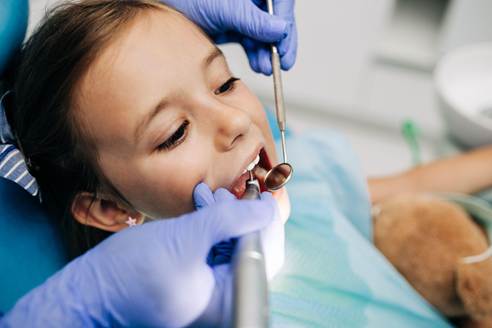
The Canadian Association of Orthodontists recommends that children have their first orthodontic evaluation around age 7. This is not because problems always exist at that age. It is because the back molars have usually come in by then, giving an orthodontist enough information to assess how the bite and jaw are developing.
At Edge Orthodontics, we offer complimentary consultations for children. An early assessment is low commitment. It either confirms that everything is on track, or it identifies something worth addressing before the growth window closes. You can book a consultation at any of our locations.
Problems That Phase 1 Can Address
Early orthodontic treatment is not a fit for every case. But for certain conditions, acting during childhood produces results that are much harder to achieve later.
Crossbites A crossbite happens when upper teeth sit inside the lower teeth instead of outside them. Left untreated, crossbites can cause uneven jaw growth and worn tooth enamel. A palate expander used during Phase 1 can correct this while the jaw is still developing.
Underbites An underbite, where the lower jaw sits in front of the upper jaw, is much easier to correct during childhood when jaw growth can still be guided. Waiting until adulthood often means surgical intervention.
Severe crowding When there is not enough room for permanent teeth to come in properly, early treatment can create space using an expander. This reduces the likelihood of extractions later.
Protruding front teeth Upper front teeth that stick out significantly are more vulnerable to injury from a fall or accident. Early treatment can bring them into a safer position.
Thumb sucking or prolonged pacifier use Habits that persist past age 4 or 5 can push teeth and alter jaw shape. An orthodontist can assess whether any changes have occurred and whether intervention makes sense.
Warning Signs to Watch For

You do not need a referral to bring your child in for an evaluation. Watch for these signs and book an appointment if you notice them:
- Difficulty chewing or biting
- Mouth breathing, especially during sleep
- Teeth that do not meet evenly when biting down
- Crowded, misplaced, or blocked-out teeth
- Jaw that shifts or makes noise when opening and closing
- Losing baby teeth very early or very late
- Thumb sucking past age 5
Early orthodontic treatment in Alberta and Saskatchewan is accessible. If something looks off, it is worth getting eyes on it sooner rather than later.
What Phase 1 Treatment Looks Like
Phase 1 treatment typically lasts 9 to 18 months, depending on what is being corrected. Common appliances include palate expanders, partial braces on specific teeth, and space maintainers. After active treatment ends, there is usually a resting period where the orthodontist monitors growth until Phase 2 is appropriate.
Throughout both phases, your child will be seen regularly at your chosen Edge Orthodontics location. We have clinics in Lloydminster, Camrose, Cold Lake, and Martensville, making it convenient for families across the region to access ongoing care without a long commute.
Is Early Treatment Right for Your Child?
The only way to know is to have your child evaluated. Many kids are seen at age 7 and simply monitored until they are ready for traditional orthodontic treatment. But for those who do need Phase 1, catching it early can mean fewer complications, shorter overall treatment time, and better long-term results. Book your child’s consultation today.